Books, Books Glorious Books!
Book Fact 1!
The world famous Charles Dickins had a secret door that looked like a book shelf in his personal library. These fake books included a series of books entitled "The Life of a Cat in 9 Volumes"*
*this information is based upon 30 Interesting Facts About Books published by:
www.interestingliterature.com (2025).
Copyright is owned by them solely.
Book Fact 2!
The Playwright Joseph Orton was sent to prison for drawing on a library book*
Book Fact 3!
The very first book sold on the Worldwide Online Shop, Amazon was entitled:
Fluid Concepts and Creative Analogies: Computer Models of the Fundamental Mechanisms of Thought
by Scientist Douglas Hofstadter and The Fluid Analogies Research Group.*
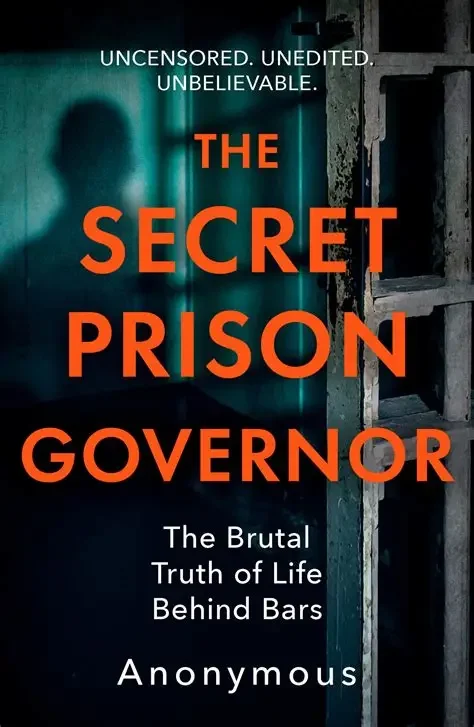
The Not So Secret Truth About British Prison's - The Secret Prison Governor. Book Review
"The biggest sea change of all is to convince the public that prisons are not just about punishing people. We need to give offenders a chance in the big wide world whatever life has thrown at them.
The prison system must recognise and nuture inamtesd so they can appreciate there is hope for them.
Danger - Monsters Lye Within
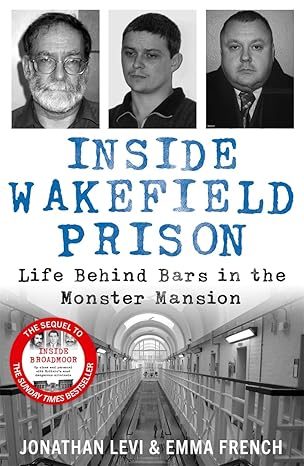
Inside Wakefield Prison - Life Behind Bars in the Monster Mansion by Jonathan Levi and Emma French (2024)
Jonathan Levi and Emma French’s Inside Wakefield Prison (2024) is a gripping exposé of HMP Wakefield—dubbed by some as “Monster Mansion”. HMP (His Majesties Prison) Wakefield is a government run prison located in rural West Yorkshire, England, UK. It houses up to 750 category A and B men over the age of 21 that have committed serious sexual offences such as rape and child abuse as well as murderers and serial killers. It is generally a prison that keeps sentenced men rather than those on remand awaiting court trials or sentencing. HMPPS Wakefield was originally built in 1594. Its modern role is as a high-security institution for men deemed too dangerous for mainstream incarceration. It is known for housing some of the UK’s most infamous individuals such as Harold Shipman, Ian Huntley and Charles Bronson. Wakefield is portrayed as both a fortress and psychological crucible.
The Book
The authors, already acclaimed for Inside Broadmoor (2019) and Bodyguard: The Real Story (2023) continue their forensic storytelling with a journalistic lens that’s both accessible to all and yet unsettling to read. When researching for this book, Jonathan and Emma used various methods of obtaining accurate information such as interviews of current and former staff as well as offenders serving time there, archival research of offenders, the prison and former rehabilitation and punishment methods, and many insider accounts. Although this book was accurate in detail, some of the story telling was a bit fragmented at times. However, it is a compelling narrative that reveals the prison’s evolution from its origins to today by blending historical depth with disturbing contemporary insight of residents past and present. Some of the stories this fab book contains are recalled by former prison officers such as Jo Taylor, John Hartshorne, Martin Baker and Vanessa Frake-Harris.
They reveal their first hand knowledge of how the system works at Wakefield Prison and there interaction with some rather notorious offenders including*:
- Charles Bronson Sentenced for Armed Robbery since 1974 to present (p.103)
- Robert Maudsley Sentenced for Murder since 1974 to Present (p. 89)
- Colin Ireland - Sentenced for Multiple Murders (Serial Killer) since 2012 (Whole Life Tariff) to Present (p. 121)
- Ian Watkins - Sentenced for Serious Sexual Offences & Child Molestation to Present (p. 129)
- Harold Shipman -Sentenced for Multiple Murders (Serial Killer - Was given a Whole Life Tariff by Killed Himself) (p. 145)
- Ian Huntley - Sentenced for Multiple Murders of Children since 2003 to Present (p. 157)
- Rose West - Sentenced for Multiple Murders since 1995 (Serial Killer - Was given a Whole Life Tariff) to Present (p. 175)
The book reveals many of the current issues that Wakefield and the wider prison estate faces including these mounting challenges: mass overcrowding of the youth, male and female estate leading to 3 to 4 people sharing inhumane cells built for single occupancy at times, deteriorating infrastructure due to age and lack of upkeep and investment, rising rates of violence of resident upon resident, staff upon residents and residents upon staff; unparamount levels of self-harm and suicide with statistics showing some of the highest rates of death in Europe as well as profound poor and unsafe staffing levels leading to cancelled education, employment, legal and health care visits. The book also demonstrates many other issues facing staff and residents on a daily basis including being locked in for between 23 to 24 hours a day, poor staff morale and mental wellbeing.
Compelling Narrative
One of the themes brought out by Jonathan and Emma is the profound effect on families of those serving long sentences. Research has demonstrated time and again how bullying at school and in the neighbourhood has profound negative educational and psychological effects on children. It can also lead to increased poverty and homelessness (Murray, 2005 & Brunton-Smith & McCarthy, 2017).
The book reminds us about how mental health care for staff and residents a like is totally insufficient. Many years of huge under investment by different governments who have chased votes rather than dealing with the states dire need to overhaul the criminal justice system including the prison and probation services and invest large sums of money on rehabilitation, inhumane living conditions and terrible staffing issues and levels (including health care and psychology) have resulted in huge numbers of staff leaving the service, unsafe care in the community and deplorable in-care health services.
Critical Reflections
While Inside Wakefield Prison offers vivid storytelling and an accurate portrayal of how Wakefield effects the near 800 men who call this home, you may note its reliance on second-hand accounts and information from former staff rather than a bird’s eye view from within the prison, much like what was achieved by the authors in their previous book and TV documentary “Inside Broadmoor”. Sadly, that occasionally undermines its authority and authenticity . However, its value lies in humanising a space often reduced to headlines of horror.
I would recommend reading this book especially if you have never read anything outside of newspaper headlines about English prison's. A note for our international readers, British prisons are a devolved issue meaning that they are controlled and funded by the country they are in. The only exception for this is English and Welsh prisons are jointly run by the Ministry of Justice in London. So Jonathan and Emma's book applies to the English and Welsh system.
*These individuals may no longer held at HMP Wakefield as offenders are regularly moved around the prison estate to prevent escape and depending on the current need of the service.
Book Details
ISBN: 978-1-78946-753-6 PAPER BACK
Published by Bonnier Books in 2024 & Printed in UK
RRP £9.99 UK
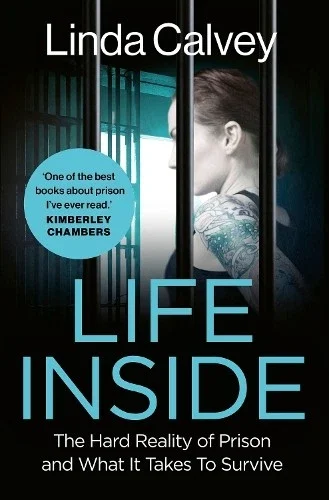
The Real Life Inside a Women's Prison - A Book Review of Linda Calvey's " Life Inside".
Authored by: Linda Calvey. (2024) Life Inside - The Hard Reality of Prison and What It Takes To Survive. Published by Headline Welbeck Publishing Group. Paper Back Edition. ISBN:978-1-80279-595-0. RRP £9.99UK.
"In prison now, a broken man left to die,
I stare at the ceiling, as days pass me by.
Life in tatters, dreams destroyed,
I stare at the heavens, very annoyed.
I'm in darkness now, going through hell,
Life passing me by as I rot in this cell,
In this living hell, where I didn't do anything wrong.
I must find a way to be strong."
(Part of a Poem by Jason Moore entitled - A Rise of A Broken Man - Owned solely by Jason Moore).
Over the years there have been many books written about and by former offenders detailing what went wrong in their life, how things could have been different and how they have changed their life around. Some inform us about the extremely harsh realities of British prisons. The author of this book, Linda Calvey, a former female armed robber and member of the East London criminal fraternity, highlights how she was lured into crime and how she got out of it only to be dragged back into the darkness by a so called friend of her late husband.
Linda is different to some other writers in that she does not glamourise her former life style but lays before her readers in black and white of how this criminal lifestyle took control of her life. Linda Calvey puts the 'real' back into real crime! In her mind she explains how she was doing this for a lavish life style and to give 'the kids' what ever they wanted. She explains how she felt unable to be able to do this in an honest way at first. Both times Linda is incarcerated her children - first time around young teens and the second time as adults tell her numerous times that they never wanted the money - they wanted to have her without the lies and deceit. She tells us how this broke her as she had never thought of it this way. Children have a way of getting to the point and bring parents and their family back to focus the real issues - that of loving their children unequivocally and give them your time and attention - not money!
The System
Prison's any where in the world are harsh and bleak places to live. Even though female offenders are less in number than their male peers, women's prisons are just as harsh and sometimes even worse. In England and Wales some women's prisons have the reputation of being what the author calls "hell on earth". Even thought we are now well and truly into the 21st century, some men, women and children are forced to live in deliberated squalor and inhumane settings - broken heating, no access to toilets or washing facilities, infestations of vermin such as rats, mice and cockroaches. Living in a dustbin would be more hygienic! So much for the British news media's fake news stories of a lavish lifestyle in prison!
Linda is not trying to get pity from her readers or make herself look like a saint. She tells the truth as to why she was put into prison and the shock and devastation that she brought on her children and family. Linda reminds us the terrible consequences prison has on women who are separated from their children or when children are born in prisons. You may think why don't they think about that before committing crime? Yes that may be true, but life is not a simple black and white thing especially when you have had the life of most of these women.
Murder Most Horrid
The second part of Linda's book focuses on her alleged murder of her partner. Linda explains how she was abused for years by him and feared for her and her families lives especially as he had threatened to murder her son had she ever left. Any survivor of domestic abuse will tell you that life in a controlling relationship where violence, financial and psychological abuse and rape is common is not so easy to leave as the perpetrators follow and they would think nothing of killing you. One day when is she at home a man bursts into her home and shoots the partner dead. She says she though it was her turn next as she hid in a corner of her living room covered in his blood and brains. Just as the assassin turns the barrel on her her stops and removes his face covering to show that it is a man she knows and then he leaves.
Linda Calvey has always denied the murder of her partner or of having anything to do with. She knew that had she tried that her days would be numbered as the underworld would take its revenge. She tell us that she was 'fitted up' by the Metropolitan Police (The MET) in London due to her ex-husband being an enemy of the police. Thus far she has not been able to prove her innocence although she has attempted to get her conviction overturned in the courts a few times. Is it a bit far fetched that The MET 'lost' forensic' evidence showing her innocence? That their attitude at that time was one of power and harsh authority? That 'bent coppers' would be prepared to lie in court to get even? I will let you answer those questions yourselves. However, just remember the huge ripples that have been felt over the decades due to injustices by the police and courts.
Conclusion
Linda Calvey's book Life Inside - The Hard Reality of Prison and What it Takes to Survive (2024) demonstrates to me how easy it can be to fall fowl of the law even when it may not be your fault! Linda reveals the bare truth about prison life for those women whom she served her time with and the lack of choice most of them had about the drugs, prostitution, shoplifting etc. Most female offenders are not murders or arsonists but what we would be classed as petty criminals yet the justice system put these vulnerable people into some of the most horrific places in the world - HMP Durham, HMP Frankland, HMP Holloway, HMP Bronzfield and so forth. This book reminds us to not believe everything we read, hear or see but to check for ourselves. Although I have never had access to Linda's court or police file's - from what I have read and researched - I tend to believe her when she says that she did not murder her late partner ands that she had no knowledge of what was going to transpire that fateful day.
This is a book that is well worth reading especially if you are in to true crime and non-fiction. Why not support your local library and borrow the book from them or you can purchase it from most book shops and major supermarkets. I brough my paperback copy from The Works.


Rob Rinder Unanimously Found Guilty of Being A World Class Author.
The Protest - A World Famous Artist. A Fatal Brush With Death.
Authored by Rob Rinder MBE. (2025). Published By Century. Printed in Great Britain. Hard Back Edition. ISBN: 978-1-529-93475-5
As an experienced criminal barrister and TV presenter, Rob Rinder has now authored 3 books in this series of criminally entertaining and enthralling fictional crime novels. With Rob Rinder's "The Protest," I'm pleased to report that my verdict on how brilliant this book is written is decidedly in its favour. This is a thoroughly engaging, thought-provoking, and gripping read.
Rob again introduces to the world of Stag Court Chambers and brings backs a number of characters that readers will recognise from the rest of the previous series. The every self flagellating Junior Barrister Adam Green, Johnathan Taylor-Cameron KC (Kings Counsel), Bobby Thompson KC, Junior Barrister Georgina and Adam's mum. Not forgetting new interesting characters to thicken the plot.
Rob although known for his sharp wit and incisive legal commentary on our screens, Rob Rinder steps into the literary dock with the assured stride of a well seasoned author. "The Protest" plunges us headfirst into the labyrinthine world of the legal system, seen through the eyes of its protagonist, Adam Green. Adam is an idealistic barrister grappling with a high-stakes case that promises to unravel not just his professional future, but also deeply personal convictions.
Rinder masterfully weaves a narrative that is both an intricate legal thriller and a poignant exploration of morality, justice, and the often-blurry lines between right and wrong. His intimate knowledge of the legal world shines through, lending an authenticity that elevates the procedural drama beyond mere conjecture. You can almost smell the polished wood of the Old Bailey courtroom one and feel the tension in the air as arguments are meticulously constructed and dismantled as part of the British legal dance that the English criminal adversary system employs. It’s clear Rinder didn't just avidly research this world; he lives it.
But "The Protest" is more than just a sneak peek behind the barrister's wig. Rob injects the narrative with a humanity that resonates deeply. Adam Green is a relatable figure, burdened by his conscience and battling both external pressures and internal demons. The supporting cast is equally well-drawn, each character serving to illuminate different facets of the central themes. While the legal minutiae are fascinating, it's the exploration of human fallibility and the relentless pursuit of truth (or at least, a truth) that truly anchors the story.
And for those of us who appreciate Rinder's signature brand of dry wit, fear not – it’s subtly sprinkled throughout the prose like perfectly placed legal objections. While "The Protest" tackles serious themes, there are moments of observational humour and clever turns of phrase that remind you of the author's distinctive voice. It's not a laugh-out-loud comedy, but rather a knowing smirk at the absurdities and ironies inherent in the human condition, particularly within the hallowed halls of justice. One might even say he presents a case for a chuckle or two.
In conclusion, "The Protest" is a highly accomplished novel that successfully navigates the complexities of the legal world while delivering a compelling human story. It’s smart, suspenseful, and heartfelt. Whether you're a legal eagle, a fan of thrillers, or simply someone who appreciates a well-crafted narrative, this book deserves to be on your reading list. Rob Rinder has proven that his talents extend far beyond the courtroom and the television studio – he’s truly found his brief in the world of fiction.
So what are you waiting for? Go borrow from a local library, buy from a good book store like Waterstones, The Works, Amazon , We Buy Books, a local independent book store or Tesco.

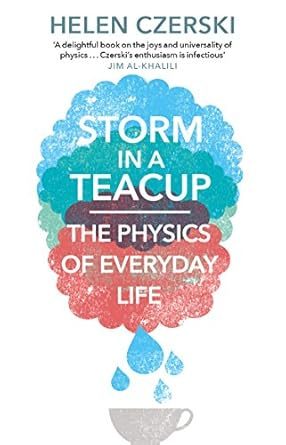
Storm In A Tea Cup - The Physics of Everyday Life
Storm In A Teacup. The Physics of Everyday Life by Helen Czerski (2016). Penguin Books. Black Swan. Paperback Edition. Purchased at HMV Stores. ISBN: 978-1-784-16425-6. Printed in the UK. RRP £10.99
If like me you found physics a difficult subject when at school - did you find it turned you off of the subject? Helen's book A Storm in a Teacup will turn all your preconceptions on there head. This brilliant, fun and highly entertaining book by Helen Czeski helps us to see the world around us and the everyday things we do - making a cup of coffee, seeing the weather around us or the food we eat - totally different.
Although this book may seem focused on an adult readership, it can be ready by any age group. It contains loads of simple easy to do practical experiments in each chapter to bring the inner child out no matter how buried they may be. This would be a great book to use if you are home educating or helping your child complete GCSE or Key Stage coursework. The fantastic experiments include:
- Gravity - Using clear fizzy drinks and a raisin - page 50-52
- Creating Dyes - Using purple plants to create dyes - pages 11-13
- Gas - Making
- popcorn - page 15-17
- Water Atoms - Coffee rings - pages 83-85
This is a small percentage of the short entertaining experiments this book contains.
Who's the Author?
Helen Czerski Profile | University College London
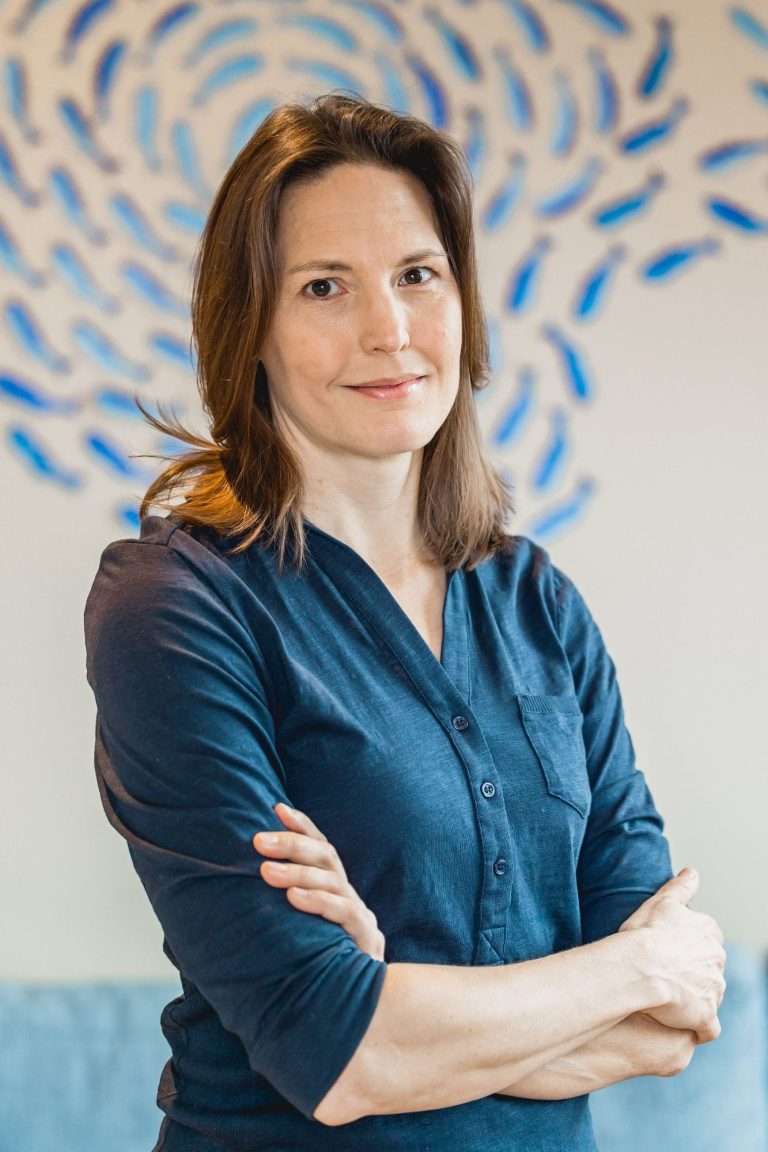
Helen is a Doctor of Physics at University College London (UCL) that specialises in Bubbles in the ocean. She comes from Manchester UK and worked in the USA Florida and in the UK. She graduated from the University of Cambridge in Physics.
You can clearly see from this book how enthusiastic she is about her subject. She attributes this to her upbringing as she was always encouraged to ask questions and explore. This is a great thing that all of us can take to heart especially parents.
Understanding the Everyday
The world we live in and the universe we share is constantly changing. Whether it is raining one moment then becomes suddenly sunny, blowing a gale force wind to thick fog. Seeing these simple things is us seeing physics in action. Helen takes all these everyday things and helps us see how simple physics can sometimes be. She writes things in a simple straight forward way cutting the scientific jargon that only a professor would understand. I can not fault this book. It was a total pleasure to read and difficult to put down each night.
This book is most certainly worth while getting or renting from you local library.
Brain Plasticity - A New Era of Growth
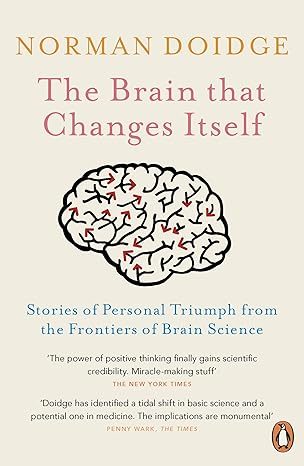
The Brain that Changes Itself - Stories of Personal Triumph from the Frontiers of Brain Science. By Norman Doidge. (2008). Penguin Books - Paper Back - Printed in Great Britian - RRP £10.99GBP. ISBN: 978-1-802-06090-4
According to the Merriam-Webb online dictionary (2025), plasticity means "to have the capacity for being moulded or altered. An ability to change conditions or have continuous alteration." To illustrate this point, let me take you back in time when 20 and I was employed by a plastic moulding company. They specialised in smaller items for the pharmaceutical and beauty industry. Small pellets of raw materials were super heated from a solid into a moulderable liquid then forced into the shape we wanted and then back into the solid structure again. You could do this endless times.
The author Norman Doidge is a doctor, psychiatrist and psychoanalyst based in the university of Columbia in New York, USA and the university of Toronto Canada. The book consists of 10 chapters covering various ways doctors, scientists and patients have researched or advocated for those who have neurological conditions caused either by genetics, disease or trauma. It also discusses how many have turned the disadvantages of these chronic conditions on their head as it where into a strength thus helping those who suffer in a similar way to them around the world. It includes illustrations of doctors who have created computer programmes to teach the brain to be able to cope once more with daily tasks.
One patient who suffered from an incurable neurological conditions along with a sever form of Neurodivergence (Autism) managed to create her own school. This educational establishment went on to help neurodivergent students of varying ages including adults, to be able to cope with daily and social life, volunteer or become employed and increase their academic abilities.
Although today the concept of brain plasticity is more widely accepted within the medical and scientific communities, this has not always been the case. That's what Norman's book is all about. He highlights that over the years scientists and the church have fought against their plastic believing colleagues. Doctor's treating their patients saw that although they had significant damage to various brain areas (ie. speech) they were able to speak again etc. They discovered that this was due to other brain areas learned to take over those functions.
This type of brain adaptability is called plasticity. Many of the scientists, mental health and neurodivergence professionals and advocates that Norman includes in his book have either used their experience as a patient or experiments to help them understand the numerous neurological conditions that exist. Many have dedicated their entire lives to seeking either curers or ways to prevent these conditions from happening in the first place. The path to science accepting human brain plasticity has not been an easy one. Many felt that our brains were like a machine - fixed at time of making and unable to alter in any way. Norman highlights how this concept started back in the time of the ancient Greece.
As a word of caution, this book contains examples of experiments carried out on animals - Rats, Mice, Cats and Monkeys. I feel this is unnecessary. Science does not need to be cruel to animals to understand health and cures. I am totally against any form of animal experimentation. Also, Norman uses some terms for Autism and Learning Disabilities that are considered out dated although the book was only published in 2008.
Conclusion
No matter what we think of this book, Norman does help the reader to appreciate that no matter what or how a person is effected by neurological disease caused by our environment or genetic predisposition - our pink and grey rugby shaped ball of gelatinous goo - our brain is able to adapt and change so that all of us can carry on being the most important thing in the world - being YOU!
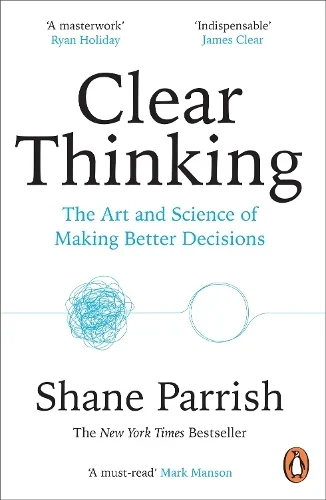
Gold Standard In Cognitive Providence
Clear Thinking - The Art and Science of Making Better Decisions by Shane Parrish (2024). Published by Penguin Random House London. Paper Back Edition. ISBN:978-1-804-94703-6. RRP UK£10.99.
This book uses common sense and a little bit of Parrish pixie dust. Use wisely what this book has to offer - it just could be the remedy you need to succeed in your life or business!
All animals, great and small, feel pain, have some level of cognitive thought and reasoning (especially cats, dogs, apes, crows, octopus etc.) but being able to compute the minutest of information and reason with ourselves what the wisest course of action would be (apart from having a conscience) is what helps to make us distinct creatures.
Shane Parrish, an American former CIA agent turned financial and business consultant reminds us of the importance of using 'Clear Thinking' in his same titled masterpiece and internationally acclaimed book. This crucial advice is a must to be able to apply in your dealings with Wall Street, the NASDAQ, UK Stock Exchange and the other world wide financial markets. However, using Shane's 'Clear Thinking' in our everyday personal life can help us to prioritise the right things and people!
Shane's use of what he has leaned in his career along with excellent advice from his mentor's, business leaders, academics and family has been turned into this brilliant book. He takes us through his 5 key pillars, that if applied correctly, will make you see things much more clearly. These include:
1. The enemies of clear thinking
2. Building strength
3. Managing our weaknesses
4. Decisions in action, and
5. Wanting what matters in life.
Shane also reminds us of the importance of stopping something we all do, sometimes quite automatically - blaming others for our own mistakes. He uses as an example a conversation he had with a mentor many years ago. Shane had applied for promotion but had not got the job. He was fuming. After some time ranting his mentor stopped him by saying: "Your refusal to accept something that has already happened is crazy." Shane was socked. So his mentor explained that although he was sorry to hear that he did not get the job which he could do - it was down to him now to take control of this situation and learn from it.
It is so difficult to do this. Like Shane we will feel angry, shocked, bitter or even just alarmed at ourselves. In chapter 2.1 (p.43) Shane drives home the point by using a quote from W.E. Henley author and poet who wrote Invictus:
"I am the master of my fate,
I am the Captain of my soul."
Another suggestion is to get away what he terms "binary thinking" (p.148) reminding us to apply "both and options". What did he mean by this? He quotes from F Scot Fitzgerald:
"The test of a first rate intelligence is the ability to hold two opposed ideas in our mind at the same time and still retain the ability to function."
So called modern thinking gets us to see things in twos - yes/no, pain/pleasure, good/evil, boy/girl and so on. But this is only a more recent conception. Life and the world around us does not work in binary alone. So although it is good to have a back up plan you will need a plan for each plan! This way we are likely to succeed and be able to look and prepare for the future and not limited our present and future. This is what gets a head of our competition.
Many of Shane's suggestions involve ways to improve our homelife including our friendships, partners, children, parents and so on. He time and again reminds us that money is not what we live for or gain true happiness with. This can only be gained from our personal relationships. Investing time, the greatest of all resources, with family and friends will help us reap rich rewards.
This book is one I enjoyed reading and felt it could be something that all of us could put to good use.
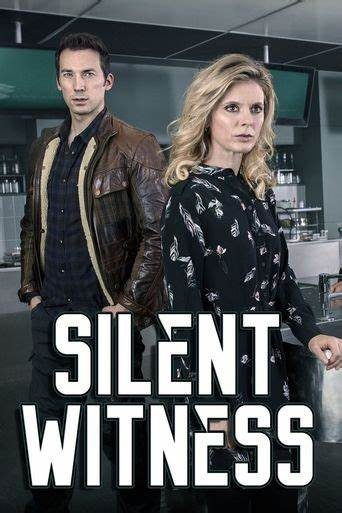
The Real Silent Witness.
Shocking cases from the world of forensic science by Wensley Clarkson. Non-Fiction Paper Back Book Edition (2021) Published by Welbeck Publishing and Printed in Great Britain. ISBN: 9781787395619. RRP UK£8.99 / US$11.95
When someone passes away two doctors have to check for extinction of life and to see if the death was natural. If it is believed that another human could be involved, then police and the local Coroner must be contacted. The police at first will act on behalf of the Coroner and follow their instructions to investigate the circumstances. The Coroner has the power to order an autopsy . If it is discovered that a crime has been committed, the Coroner halts their proceedings and hands over the case to the police and criminal justice system.
What is an autopsy? Not that long ago it would of meant that a trained specialist doctor called a Pathologist or Forensic Pathologist would check the body outside and in for signs of trauma. Today however there is a non-invasive autopsy using a MRI machine that scans the complete body and is checked by specialist consultant radiographers. In the BBC TV drama that this book is based on gives the impression of high tech no money spared investigations by a forensic pathologist and team. Sadly in the real world we live in, Wesley explains that tests and investigations can take anything from a few hours to near on a year. Tests and using this technology costs and is paid for by the police force asking fore the test. Sometimes there are no tests available as that time so samples are taken and keep in a sterile way for when the technology is available in the future. Photographs are taken, witness from the police watch the autopsy if carried out. Then there is all the work that both the police and Coroner's team undertake.
I love the way Wensley Clarkson has written this book. Its easy to follow and understand although it contains medical and legal processes throughout. In the 296 pages this paper back edition (2021), we are taken on a journey that consists of four different sections:
1. Introduction
2. History of Forensic Science
3. Real Case Histories of Crimes and Cold Cases
4. The Story Behind the TV Show
Wensley also includes a section that lists all the legal and medical jargon and explains what each word means. Before the author delves into the full real life stories the show is based on, he mentions something called "The Silent Witness Effect". This is also known as 'The CSI Effect'. This is were members of the public watch TV shows like Silent Witness, CSI and other police dramas and believe that not only is forensics infallible but tests are carried out in just minutes. The truth is not always so easy. At times cases are dropped due to insuffient evidence as they contain extremely poor material or the investigation was compromised in some way. One case that shouts out loud about this is the devastating death of young 18 year old Mr Stephen Lawrence from Eltham South East London. If not for the shear bravery of Stephen's family, especially his parents, the Metropolitan Police in London would of kept this case hidden from public eyes and partial justice would not of been served.
As a fan of the TV show, it is illuminating to have read this book and how it reveals the cases that some of the shows are based on. Also, the ends to which the writers and producers have gone to to ensure the show is respectful and as accurate as possible as a TV drama can be is nothing short of amazing. I would most certainly encourage you read this brilliant book.
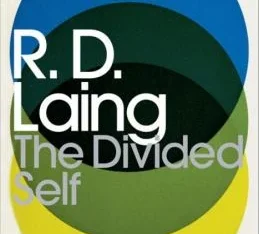
The Divided Self.
Book author: Dr R. D. Laing
The Divided Self by R.D. Laing. Paperback Edition. Published in 1960 & 2010 by Penguin Modern Classics, printed in Great Britain. ISBN: 978-0-241-56297-0 RRP UK£10.99
"At some stage a machine which was previously assembled... may find its connexions divided".... Norbert Wiener in Human use of human beings.
Have you ever accidentally split your clothing? That beautiful skirt or expensive designer suit are now torn apart. Usually you can take that item of clothing to an expert like a tailor or seamstress who will endeavour to fix that item without it looking as if were ever damaged. Sadly, at times this is just not possible - the damage is to great. Laing's classic book The Divided Self (1960 & 2010) talks about people that are extremely mentally unwell. He writes from not just the perspective of a psychiatrist but from someone who genuinely wants to destigmatise and de-medicalise these conditions. He expresses this through what he calls 'a phenomenological lens'. So what is phenomenology and how will this help us interpret Laing's book?
Understanding the written word using the written word
Phenomenology is a form of scientific qualitative research- examines the written word or our speech - based in philosophical ideals. This research type was constructed back in 1870 by a professor called Edmond Husserl from Germany. It literally means to look at the experiences of humanity from the perspective of the person who wrote it in the same time or period that it was written (Stanford Universities Philosophical Encyclopaedia, 2003).
To some his book can be a bit of a handful and difficult to understand as Laing wrote it in a scientific jargon laid way rather in a more general public friendly way like some of his contemporises at the time (1960/70's) such as Oliver Sacks, Stanley Milgram or Phillip Zimbardo. Laing tries to reveal the conditions & life history of five of his patients that suffered from chronic mental illness - Schizophrenia, Bipolar Disorder etc. He attempts to understand what has caused this so called 'split' in their person compared to those did not exhibit these symptoms. He was well known for his attempts at seeing the patient as an equal and as a person worthy of respect and being treated with dignity. This was a radical idea back then and one that was not very popular in the psychiatric or medical field who had always told patients to never question a decision or diagnosis let alone to treat them with respect! We have doctors like Laing to thank for the slightly more open way medicine treats its patients especially its "mental" ones. These men and women were real trail blazers.
The paperback edition (2010) version has got a new introduction by Dr Anthony David who is a neurologist and lectures at the Maudsley & Bethlem (former Bedlam) NHS Hospitals in North London, UK. Laing splits this book into three sections: 1. Theory 2. Psychosis and lastly examination of his own ideas through a more detailed patient history.
"The only living things in the prairie were wild beasts. Rats infested this city. Her existence was depicted in images of utterly barren, arid desolation" (p.205).
Although I am a scientist and understand phenomenology some what, I personally found it difficult to read and had to go through it in stages. It was hard to get on Lains's wave length at times. Although some of what he writes about with regrda to assisting patients from their perspective is essential in today'stherapy sessions and I wholeheartedly agree with him. No one has the right to talk down to another person or treat you as a third or fourth rate person just because you have an illness. After being treated over the years like this as someone with lived experience of Major Depression and suicidality, it would be morally and ethically corrupt of me to treat clients with anything but the highest respect.
I'll let Laing finish this review. He writes:
"The task in therapy then comes to be to make contact with the original 'self' of the individual which, or who, we must believe is still a possibility, if not an actuality, and can still be nursed back to a feasible life" (p.158/159).
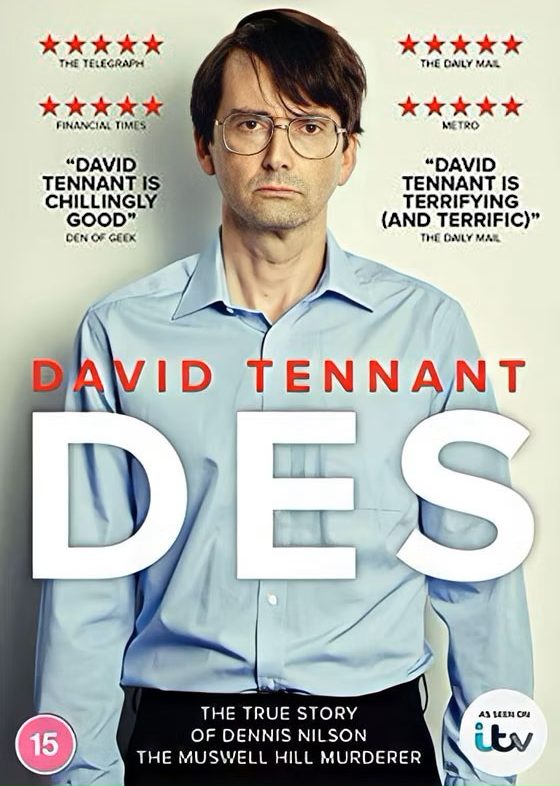
Psychopathy: Understanding the Mind of the Master Manipulator!
Highly qualified and motivated professionals
What is Psychopathy? Prof Robert Hare a Canadian Psychologist is considered one of the leading scientists in this subject puts it like this:
[A] self-centred, callous and remorseless person profoundly lacking in empathy and the ability to form warm emotional relationships with others. A person who functions without restraint of a conscience (Hare, 1993 as cited in Nyholm & Nyholm, 2012).
Although Hare, Neuman and others have provided extensive research into psychopathy, the modern 'father' of Psychopathy was Harvey Cleckly an American Psychiatrist in the early 20th century. He published a book entitled "The mask of sanity" (1941). He had been treating a number of patients in prisons and mental asylums who displayed symptoms that were totally different. They lacked the symptoms & characteristics of his other patients. He stated:
"Aside from these groups and aside from all the types of patients recognised as psychotic, there remains for our consideration a large body of people who are incapable of leading normal lives and whose behaviour causes greatest distress in every community (Cleckley, 1941, p. 27)."
Cleckley then goes on to call these groups of patients "Psychopaths". Psychopaths have always existed hidden amongst the rest of humanity. History has shown that psychopathy has been written about even as far back as 700 BCE when the bible book of Deuteronomy was written by Moses stating some of the symptoms and again in 371 BCE by a Greek philosopher Theophrastus (Kiehl, 2020, p. 36 & 37). Although they have the same core deviances, they can mask themselves to some degree and hide within crowds in society. A number of research papers have demonstrated that most psychopath's who have a low IQ tend to be more violent where as those with a high IQ can be more sly and cunning (Hare, 1993, p. 102-107). No matter what their IQ, they are master manipulators and rule breakers just the same. Psychopaths can have a significant impact on society. While a small minority may engage in violent criminal behaviour, others may succeed in positions of power and influence, exploiting and manipulating others for personal gain.
How can I tell who they are?
Psychopathy is a serious personality disorder characterized by a profound lack of empathy, remorse, and conscience. While often depicted in popular media as violent criminals, psychopaths can exist in all levels of society, from corporate executives to charming con artists.
Key Characteristics of Psychopathy:
Lack of Empathy and Remorse: Psychopaths struggle to understand or share the feelings of others. They rarely feel guilt or remorse for their actions, even when they cause significant harm.
Superficial Charm and Manipulativeness: Psychopaths can be incredibly charming and persuasive. They use this charisma to exploit and manipulate others for their own gain.
Grandiose Sense of Self-Worth: They often possess an inflated sense of their own importance and abilities, while simultaneously devaluing others.
Callousness and Lack of Affect: They display a lack of concern for the suffering of others and often appear emotionally cold and detached.
Impulsivity and Irresponsibility: Psychopaths tend to act impulsively and irresponsibly, often disregarding the consequences of their actions.
Parasitic Lifestyle: They often exploit and manipulate others for personal gain, relying on others to support them financially or emotionally.
Back in the 1970's, psychologist Robert Hare and colleagues constructed a diagnostic tool called the Psychopathy Checklist (PCL). Since then, the checklist has been revised to the current version in use entitled PCL-R which is made up of four sections and can take between 3-4 hours to complete with the patient/prisoner. Although there are other assessment tools, the PCL-R is the most widely used assessment tool for diagnosing psychopathy. It is a comprehensive instrument that evaluates individuals on numerous factors, including interpersonal, affective, and lifestyle characteristics. Other ways of diagnosing or confirming a diagnosis is by using brain scanning equipment such as MRI & fMRI machines as wells as EEG's (for a detailed understanding of these methods, please see the book The Psychopath Whisperer by Dr Kent Kiehl, 2014).
Keeping the population safe
Serial killers and rapists tend to capture people imagination and many TV programmes, pod casts, books, magazines and radio shows etc., have been created about them. Although not all serial killers and serial rapists are psychopathic, a large proportion are. To illustrate, here are some famous, or should I say infamous, British psychopaths:
Jack the Ripper
Charles Bronson
Peter Sutcliff
Dennis Neilson
Ronnie Cray
Peter Bryan
Graham Young
Delroy Grant
Patrick (Nosey) Kelly
Joanne Dennehy
Each country has its own judicial or justice system. These systems usually don't know what to do with their psychopathic population. Prisons and correctional centres around them world dislike housing them within the general offender population although research shows that they, on the surface of it at least, tend to be 'model' prisoners. However, they tend to be behind most of the violence and disorder within prisons. On the other hand, special secure forensic hospitals don't want them either. Most psychopaths do not believe they are mentally ill and take offence at being placed in such hospital wards thus they cause considerable difficulties for the nursing and medical staff. Within the England and Wales, there are three 'special' high secure hospitals that are run by the NHS. These are:
Broadmoor in Berkshire
Ashworth in Liverpool
Rampton in Nottingham
There are also smaller medium and low security forensic hospitals or specific wards/units around the UK. Some of the prisons (HMPPS) have special units for server personality disorders called PIPES or Psychologically informed planned environments (House of Lords, 2023). One of these is HMPPS Grendon (HMPPS stands for His Majesties Prison and Probation Service and has replaced the old HMP and NPS or national probation service in England and Wales) located in Buckinghamshire. Although these units deal with all types of violent offenders and all personality disorders, a high proportion of Grendon's and PIPES population suffer from psychopathy and have been sent there due to the fact they can not be managed by general prison wings.
So - who's a naughty psychopath then?
Even those that undergo specialist training in diagnosing psychopathy, which Jon Ronson calls "Psychopath spotters", can at times miss them. Why? Well there likened to Chameleons for a very good reason. They blend in. They a great at faking it by learning from others around them. So if you have read this article and felt that you know one or two or are even married to one (male or female) - run! or ask the police to see if they have a record under what is called Claire's Law.
Disclaimer: This information is for general knowledge only. For diagnosis and treatment of any mental health condition, consult a qualified mental health professional. This blog post is for informational purposes only and should not be considered medical or psychological advice. I hope this blog post provides a helpful overview of psychopathy. This blog post aims to provide a general understanding of psychopathy based on existing research.
There is much debate surrounding psychopathy and its validity even though it is one of the most widely researched mental/personality disorders. Here is a made up conversation between two respected psychologists - who do you agree with??
The Psychopathy Debate
Meet the Characters:
Dr. Evelyn Walsh: A clinical psychologist specializing in personality disorders.
Dr. Mark Carter: A forensic psychologist with expertise in criminal behaviour.
Setting:
A university conference room.
(Scene opens with Dr. Walsh and Dr. Carter seated at a table, engaging in a lively discussion.)
Dr. Walsh: Mark, I understand your perspective, but I fundamentally disagree with the classification of psychopathy as a mental health disorder.
Dr. Carter: Evelyn, I find that categorization crucial. It allows us to understand the underlying psychological mechanisms and develop appropriate interventions.
Dr. Walsh: I believe the focus on psychopathy as a disorder pathologizes individuals who may simply exhibit certain personality traits. Many of the characteristics associated with psychopathy, such as boldness and dominance, can be observed in successful individuals across various fields.
Dr. Carter: While that may be true in some cases, we must acknowledge the significant harm that individuals with high psychopathy scores can inflict on others. Research by Robert Hare, particularly his work on the Psychopathy Checklist-Revised (PCL-R), has consistently demonstrated a strong link between high psychopathy scores and criminal behaviour, violence, and recidivism.
Dr. Walsh: I acknowledge the validity of the PCL-R as a tool for assessing certain personality traits. However, it oversimplifies complex human behaviour. It focuses on negative aspects, neglecting the potential for positive contributions from individuals who may score high on some psychopathy dimensions.
Dr. Carter: I agree that the PCL-R has limitations. However, it provides a valuable framework for understanding individuals who exhibit a constellation of traits that pose a significant risk to themselves and others. Neuroimaging studies, such as those conducted by James Fallon, have shown that individuals with high psychopathy scores exhibit distinct brain abnormalities, particularly in regions associated with empathy and emotional regulation.
Dr. Walsh: While neuroimaging studies offer intriguing insights, they cannot definitively prove that these brain differences are the cause of psychopathic behaviour. Environmental factors, such as early childhood trauma and adverse social experiences, undoubtedly play a crucial role.
Dr. Carter: I agree that environmental factors are significant. However, I believe that recognizing psychopathy as a disorder allows for more targeted interventions, such as specialized treatment programs aimed at addressing the underlying deficits in empathy, emotional regulation, and impulse control.
Dr. Walsh: I believe the focus should be on addressing harmful behaviours, regardless of whether they are labelled as symptoms of a disorder. We need to develop interventions that promote prosocial behaviour and reduce the risk of harm to others.
Dr. Carter: I believe that acknowledging psychopathy as a disorder, while acknowledging its limitations, provides a valuable framework for understanding and addressing the challenges presented by individuals who exhibit these traits.
(Scene ends with both psychologists acknowledging the complexity of the issue and the need for continued research and dialogue.)
Note: This script presents a simplified version of a complex debate. The views expressed by the characters are not necessarily representative of all psychologists' opinions.
Disclaimer: This blog post is for informational purposes only and should not be considered medical or psychological advice. It is crucial to remember that not everyone who exhibits some of these traits is a psychopath. Psychopathy is a complex disorder that requires professional assessment and diagnosis.
Further Reading:
Snakes in Suits - Prof. Robert Hare & Prof. Paul Babiak - Harper Collins Publishers
Without Conscience - Prof Robert Hare - Guilford Publishers
The Mask of Sanity - Dr Harvey Cleckley - EPBM
The Psychopathy Whisperer - Dr Kent Kiehl - Oneworld Publishers
Rebel Without A Cause - Dr Lindner - Other Publishers
The Psychopathy Test - Jon Ronson - Picador Publishers
True Life British Psychopath's:
A Passion for Poison - Carol Ann Lee - JB Publishers
The London Underground Serial Killer - Geoff Platt - Pen & Sword Publishers
Wicked Beyond Belief - Michael Bilton - Harper Press
Killing For Company - Brian Masters - Penguin Publishers
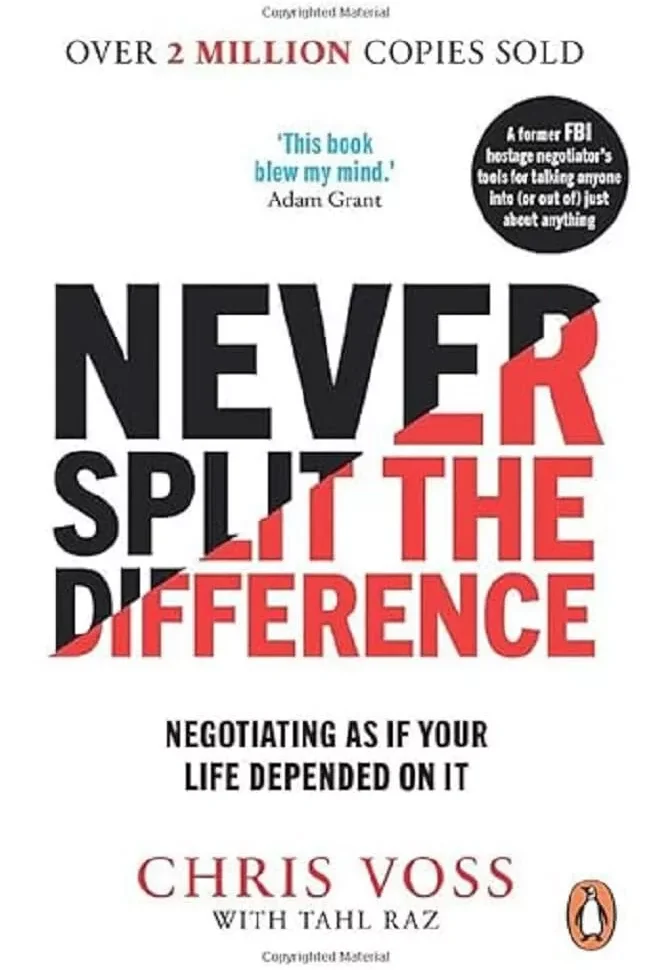
Never Split The Difference. Negotiating as if your life depended on it!
Book Author: Chris Voss & Taz Raz
Negotiating Chris Voss Style
A book review of former FBI chief international negotiator Chris Voss' 2022 (with Tahl Raz) paperback book Never Split The Difference - Negotiating as if your life depended on it.
Never Split the Difference: Negotiating As If Your Life Depended On It is a mind blowing and hard hitting book by authored by none other than Chris Voss, a former FBI head international hostage negotiator. If it was going to blow or shoot up in the most dramatic of ways - then Chris was your man for the job. Voss is now a private consultant and director of The Black Swan Group and lecturers in negotiating skills at a number of top American universities including Harvard and MIT. In this book, Voss takes readers on a perilous journey through the high-stakes world of international and domestic terrorist hostage negotiations and translates his experiences into practical, everyday negotiation strategies you could use at home, work, school or just about anywhere.
The central theme of the book is that traditional negotiation tactics taught at university and training camps across the world, often based on compromise and mutual agreement, are not as effective as tactical empathy and psychological techniques. Voss introduces concepts like the "accusation audit," mirroring, labelling and the power of "no" without actually saying the word to demonstrate how understanding and leveraging the hostage takers own human psychology and cognitive states against them can lead to successful negotiations and saved lives. One of the main standout aspects of Never Split the Difference is Voss's ability to weave real-life anecdotes from his career with actionable advice that works. This not only makes the book a really engaging read but provides readers with a clear understanding of how to apply these psychological techniques in various situations, from business deals to personal and family interactions.
Voss's writing is direct, carefully constructed and approachable - just like his negotiating tactics, making complex psychological principles accessible to readers without needing a degree in negotiation or psychology to understand it. Each chapter is packed with practical his tips and strategies that can be implemented immediately, making it a valuable resource for anyone looking to improve their negotiation skills. For example, on pages 92 to 95 Chris introduces us to is one line "email magic" - "Have you given up on this project?". So if are having problems getting a response from a business or individual whether it is in response to a job, purchase, contract negotiation or family problem - it is guaranteed to work - and it does! I tried it myself with a problem I am having with my employer who has unprofessionally been ignoring my emails and within an hour of sending the one line magic, I had had a response within an hour of sending it and on a weekend!!
Overall, this 274 page marvel - Never Split the Difference is an essential read for anyone who wants to become a more effective negotiator or just wants to get more out of life. Voss's insights and methods challenge conventional the conventional wisdom and provide a fresh and unique perspective on how to achieve better outcomes in your life. The book is both informative and entertaining, making it a must-have for professionals, entrepreneurs, and anyone interested in the art of negotiation.
This book review examined the 2022 edition of Chris Voss (with Tahl Raz) in Never Split the Difference - Negotiating as if your life depended on it. Published by Penguin Random House UK books. ISBN: 978-1-847-94149-7. RRP £10.99. Non-Fiction. Available from all good book stores in the High Street and Online.