
Anxiety in neurodiversity - Why the link and can it be overcome?
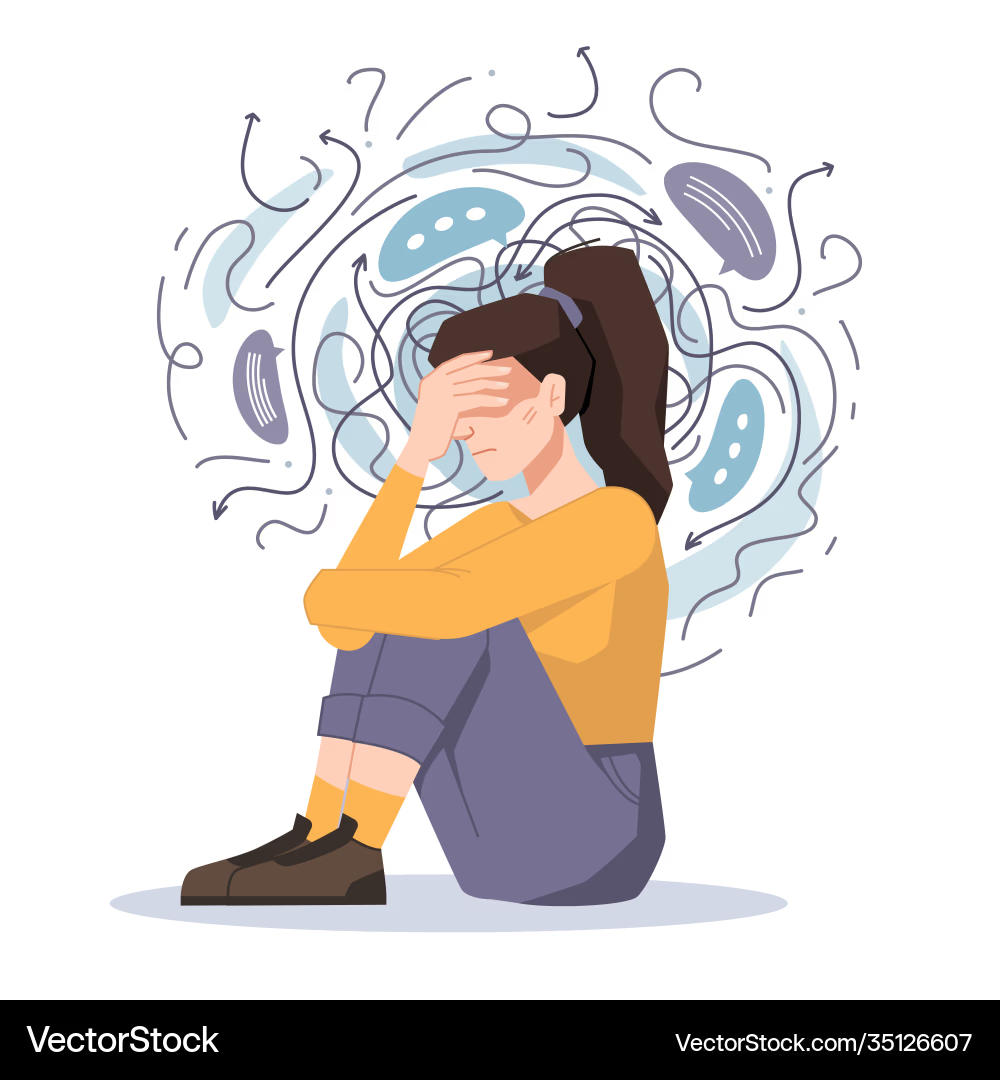
Stress, fear, panic and over thinking are all elements of one protective mechanism produced in the human brain - anxiety. Anxiety is a normal part of our every day life. It is created within what scientists call the brains limbic system. These areas produce chemical and electrical transmissions that communicate with other brain regions and body organs to assist us in preparing for perceived or real threats to life. That's when we get waves of anxiety we can feel nauseas or feel our heart beat getting stronger. Anxiety only becomes a problem when it starts interfering with our daily life over a period of time.
It's amazing that our second largest bodily organ can want to protect us on one hand but then destroy us on the other. However, its not just our brain going rogue or AWOL on us that is the cause. Our subconscious self has a profound effect on us without us even knowing it as does our consciousness. These can contribute to our levels of anxiety. When our natural responses to our environment become damaging to us, science calls this 'maladaptive' or harmful managing or coping strategies. Owen O'Kane a well known Irish psychoanalyst in his book Addicted to Anxiety suggests that no matter what may trigger our anxieties - that we then can become addicted to them and this makes it very difficult, but not impossible, to let go of them (O'Kane, 2025). How can this be the case? Owen explains that anxiety is there to protect us - keep us safe. So we wrongly reason "why would I give up my safety net in a very unsafe world?"
How does this suggestion about being addicted to anxiety make you feel? Owen goes to great lengths to differentiate between what addiction means and that it is not the same as being chemically addicted to drugs. "A compulsive, chronic, physiological or psychological need for a habit-forming behaviour, or activity having harmful physical, psychological, or social effects and typically causing well-defined symptoms (such as anxiety, irritability, tremors, or nausea) upon withdrawal" (Merriam-Webster, 2026).
Beware! Here be sharks!
Our thoughts are extremely powerful things just like a shark. We as human beings have all types of thoughts and emotions:
- Pleasure
- Happieness
- Fright
- Sadness
The list is endless. It is estimated that we humans have approximately over 6,000 thoughts in any given day (Raypole & Johnson, 2022). Anxiety is a collection of thoughts that control us and our actions.
- "Don't talk to them..."
- "Stay at home - you are safer there..."
- "This situation is to dangerous, I must leave now.."
- I'm fat and ugly.."
- "Getting on this bus is dangerous.."
- "I always mess everything up so why would anyone want to be my friend?"

Although it would be great to magically wish our anxieties, like a gathering storm, to disappear, you and I do have more control over these harmful thoughts and emotions than they like us to think! Now I am not saying we purposefully want them to stay or that we purposely cause them. However, can work at quietening our angry mind turning these emotions to our benefit or getting them to stop altogether with some effort. Lets use an illustration. Several years ago I visited the beautiful Greek island of Crete. My friend an I went on a boat trip to the the inspirational island of Spinalonga. On the way back as it was a very hot day, the captain of the boat moored up in a cove and said if anyone wanted to jump in the sea for a swim we could before we finished the journey back to port. Loads of us dived or jumped to cool off and revive ourselves. As I surfaced on the emerald green Mediterranean sea. my friend pointed to the ships crew on its top deck with riffles pointing down at the sea. Once we all re-joined the boat a crew member came up to us and said he had seen us looking at the guns. He explained they were not meant for us but were a protection against sharks. The cove was well known to be frequented by Hammer Head sharks!
So what does our illustration mean? It could of been easy for us to allow the thought of sharks to make us frightened and race out of the water. However, we allowed the men, our watchmen, to warn us if we needed it. Also, our emotions can become like hungry sharks searching for food. Most shark attacks are down to mistaken identity - them thinking the human is a seal. Our beautiful brain is teaming with life like the Mediterranean sea. Their billions of cells and neurons that come together to form our brain and our thoughts and actions. When our anxieties start to interfere with our daily lives they can start interpreting safe events as dangerous. These can in turn stop us from being able to take part in enjoyable activities like seeing friends, going to the shops, speaking to others etc. These sharks can be controlled though. No it will not be easy, especially at the beginning and if they have been given free rein for some time, these emotions have been reinforced in our brains making their neural connections stronger. We don't need to rid the sea's and ocean's of sharks to be safe when swimming but we do need to know how to keep ourselves safe and push them away successfully.
Everyday ways to cope with chronic anxiety
Coping with chronic anxiety does not have to be a total chore. Below, we include 9 suggestions based upon clinical advice from the NHS and the internationally renowned medical website and USA teaching hospital The Mayo Clinic. Remember that this advice may need to be tweaked to suite your individual needs:
1. Regulate your body first
Chronic anxiety is strongly tied to physical symptoms such as restlessness, sleep problems, muscle tension, and rapid breathing . Daily practices that calm the body reduce the intensity of anxious thoughts.
- Breathing exercises — slow, diaphragmatic breathing reduces hyperventilation and lowers heart rate.
- Gentle movement — walking, yoga, swimming, or stretching reduce stress hormones and improve sleep.
- Sleep routines — consistent sleep stabilises mood and reduces vulnerability to worry.
- Reduce stimulants — caffeine can worsen restlessness and sleep disruption .
2. Create small, predictable routines
Anxiety thrives on uncertainty. Predictable routines reduce cognitive load and help your brain feel safer.
- Morning and evening rituals
- Regular meals to stabilise blood sugar (low energy can mimic anxiety)
- A consistent “wind‑down” period before bed
- A simple daily plan with 2–3 achievable tasks
3. Use cognitive strategies to interrupt worry cycles
Chronic anxiety often involves persistent, uncontrollable worry and rumination .
- Worry scheduling — set a 10–15 minute “worry window” each day; postpone intrusive worries until then.
- Name the thought — “This is an anxious prediction, not a fact.”
- Reality‑testing questions — “What evidence supports this? What evidence contradicts it?”
- Limit reassurance‑seeking — it temporarily helps but reinforces anxiety long‑term.
4. Stay connected rather than withdrawing
Anxiety can make you avoid situations or isolate yourself, but avoidance strengthens anxiety over time .
- Talk to someone you trust about how you’re feeling
- Use gradual exposure: take one small step toward the thing you’re avoiding
- Join a support group (local or online)
- Keep low‑pressure social contact (short messages, brief meet‑ups)
5. Support your nervous system through lifestyle habits
These are simple but powerful.
- Regular exercise — reduces stress and improves sleep
- Balanced meals — prevents dips that mimic anxiety
- Limit alcohol and nicotine — both can worsen anxiety long‑term
- Hydration — dehydration can trigger dizziness and palpitations
6. Use grounding techniques when anxiety spikes
These help bring you back into the present moment.
- 5‑4‑3‑2‑1 sensory grounding
- Hold something cold
- Slow counting
- Describe your surroundings out loud
- Focus on feet on the floor + breath
7. Build emotional tolerance rather than fighting anxiety
Trying to “get rid of” anxiety often makes it stronger.
- Practice noticing sensations without judging them
- Use phrases like: “This is uncomfortable, but I can handle it.”
- Allow the wave of anxiety to rise and fall naturally
- Track patterns to understand triggers
8. Use self‑help therapies and structured tools
The NHS recommends self‑guided CBT tools, online courses, and workbooks for managing worry and anxiety .
These can help you:
- Identify thinking traps
- Challenge catastrophic predictions
- Build coping plans
- Reduce avoidance behaviours
9. Know when to seek additional support
Professional help is recommended if:
- Anxiety affects daily functioning
- You feel anxious most days for 6+ months
- You struggle to control worry
- You experience panic attacks, low mood, or physical symptoms that worry you (NHS diagnostic criteria for GAD) .
Talking therapies (especially CBT) and sometimes medication can make a significant difference.
Why not try some of these suggestions and see how they go. Remember that its not a magic wand. These suggestions will be best used again and again and at the beginning of when you can start to feel anxious. Please feel free to tell us what works for you and if you tried any of our suggestions, which was best suited to your needs. Thanks for reading.